Confused why a TCT blade seems cheaper than an HSS one? This pricing puzzle can make you question your choices. Let's clear up the confusion and find the real answer.
No, TCT saw blades are not always pricier than high-speed steel (HSS) blades. The final cost depends heavily on the quality of materials, like the grade and size of the carbide tips on a TCT blade, and the specific coatings on a solid HSS blade.
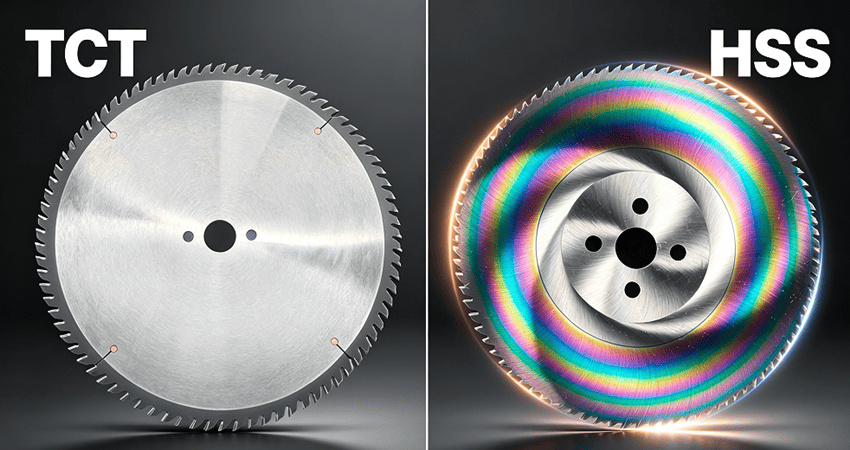
I've had this conversation many times. A customer calls me, surprised by a quote I sent. They often say, “Why is the HSS saw blade you quoted more expensive than the TCT saw blade? I always thought TCT blades cost a lot more.” When I hear this, I know there's a common misunderstanding about what these blades really are. This belief misses the bigger picture. To really understand the price, we need to look closer at what makes up a saw blade. Let's break down the hidden factors that truly determine the cost.
You're comparing blade prices but feel like you are missing something important. Choosing the wrong one based on a simple price tag can lead to poor cuts and wasted money.
The actual price is affected by the blade's core material, the grade and size of the carbide tips for TCT blades, the number of teeth, and any special coatings for HSS blades. Manufacturing complexity and brand reputation also play a big role in the final cost.

When we compare a TCT blade to an HSS blade, it is often not an apples-to-apples comparison. It's more like comparing two completely different technologies designed for cutting. The price tag you see is just the final number. The real story is in the materials and manufacturing processes behind it. A very cheap TCT blade with a soft steel body and tiny, low-grade carbide tips is a world away from a premium HSS blade made from a solid block of specialized steel with a high-tech coating. The HSS blade in this case will be much more expensive, and for good reason. It’s built for durability and performance in demanding situations. Understanding these details is key for any buyer. It helps you select a saw blade that truly fits your application and your budget, instead of just picking the one that looks cheapest at first glance.
Comparing Key Cost Drivers
| Feature | TCT Saw Blade | HSS Saw Blade |
|---|---|---|
| Construction | Steel Body + Carbide Tips | Solid High-Speed Steel |
| Key Cost Drivers | Tip Grade, Tip Size, Tooth Count, Body Material | Base Material, Diameter, Thickness, Coatings |
| Material Quality | Varies widely from basic to premium | Generally high, as it's solid HSS |
| Add-ons | Quality of brazing the tips is crucial | Coatings (e.g., TiN, TiCN) are essential for performance |
How do TCT blade components change its price and performance?
You see two TCT blades that look the same, but one costs double. This makes it hard to know if you are paying for quality or just a brand name.
The price and performance of a TCT blade are determined by two main things: the quality of the steel blade body and the grade, size, and number of the tungsten carbide tips that are brazed onto it. Better materials mean a higher price and better cutting results.

A TCT, or Tungsten Carbide Tipped, saw blade is a composite tool. It is not made from one single material. Think of it as having a body and teeth that are made separately and then joined together. The quality of each part can vary a lot, which directly impacts the price.
The Blade Body: The Foundation of the Cut
The body of the blade is a steel plate. Its job is to stay flat and stable while spinning at high speeds. Cheaper blades use softer steel.
- Manganese Steel: This is a basic, low-cost option. It works for light, DIY tasks but can warp under heat from continuous professional use.
- 75CR1 Steel: This is a step up. It's a tool steel that offers better hardness and heat resistance, making it suitable for professional workshops.
- SKS51 Steel (Japanese Import): This is a premium choice. It has excellent fatigue resistance and stays stable even under heavy industrial use. This quality comes at a higher price.
The Carbide Tips: The Cutting Edge
The "TCT" part refers to the tips. These are small pieces of very hard tungsten carbide brazed onto the teeth.
- Tip Grade: Carbide is not all the same. I often use grades like C, B, and A.
- Grade C (e.g., OKE403): A standard grade for general-purpose cutting.
- Grade B (e.g., PP03H): A higher quality grade with better wear resistance, good for harder materials.
- Grade A (e.g., XCR05+): A top-tier, micro-grain carbide for industrial cutting of metals and very abrasive materials. It lasts much longer but costs more.
- Tip Size and Tooth Count: Larger tips and more teeth mean more carbide material is used, increasing the cost. More teeth also typically provide a smoother finish.
A blade with an SKS51 body and Grade A tips is a high-performance industrial tool. A blade with a manganese steel body and Grade C tips is a budget-friendly option for occasional use. They are both TCT blades, but their prices and capabilities are completely different.
Why would an HSS saw blade be more expensive?
You expected HSS blades to be the cheaper option, but your quote says otherwise. This surprise can make you doubt if you are getting a fair price for your HSS blade.
An HSS saw blade can be more expensive because it is machined from a solid piece of costly high-speed steel. It also often requires an advanced, expensive coating to optimize it for cutting specific materials, which adds significantly to the final price.

When you buy an HSS, or High-Speed Steel, saw blade, you are not buying a composite tool like a TCT blade. You are buying a solid piece of advanced metal. This is the first reason for its potentially high cost. The entire blade, from the center to the tip of each tooth, is made from a special steel alloy that is designed to withstand very high temperatures without losing its hardness. This material itself is expensive to produce.
The second major cost factor is the coating. A raw HSS blade works, but its performance is massively boosted with a specialized surface coating1. These coatings are applied using a complex process called Physical Vapor Deposition (PVD). This process adds a micro-thin layer of ceramic material to the blade's surface.
The Critical Role of Coatings
These coatings are not like paint. They are bonded to the steel at a molecular level and provide huge benefits.
- TiN (Titanium Nitride): This is a common, gold-colored coating. It reduces friction and increases surface hardness, extending the blade's life when cutting softer steels.
- TiCN (Titanium Carbonitride): This coating is harder than TiN. It is excellent for cutting abrasive materials or harder steels because it resists wear much better.
- AlTiN (Aluminum Titanium Nitride): This high-performance coating is perfect for high-speed cutting. It forms a layer of aluminum oxide at high temperatures, which protects the blade from heat.
The coating process requires specialized equipment and adds a significant cost. So, when you see a high price on an HSS blade, you are paying for a solid block of premium steel plus a high-tech coating2 that makes it cut faster, last longer, and handle tougher jobs. This is why a top-quality coated HSS blade can easily be more expensive than a mid-range TCT blade.
| Coating | Full Name | Key Benefit | Typical Application |
|---|---|---|---|
| TiN | Titanium Nitride | General purpose, wear resistance | Cutting softer steels |
| TiCN | Titanium Carbonitride | Increased hardness, good for abrasive materials | Cutting stainless steel, cast iron |
| AlTiN | Aluminum Titanium Nitride | High heat resistance, allows higher cutting speeds | Dry or high-speed cutting of hard steels |
Conclusion
Don't judge a blade by its type. A high-quality HSS blade can easily cost more than a basic TCT one. Understand the specs to choose the right tool.
"HSS Cold Saw Blade Coatings UK | Tin, Steam, TiCN ...", https://www.alliedtooling.com/articles/hss-cold-saw-blade-coatings-uk-%7C-tin%2C-steam%2C-ticn%2C-tialn-explained. The application of specialized coatings to HSS blades significantly enhances their performance and durability, as supported by coating technology research. Evidence role: mechanism; source type: research. Supports: The second major cost factor is the coating.. Scope note: The support may not detail all types of coatings or their specific benefits. ↩
"Understanding Hss Blade Price: Durable, High-Performance ...", https://www.bsblade.com/news/understanding-hss-blade-price-durable-high-perfo.html. The cost structure of HSS blades includes both the material and the advanced coating processes, as outlined in manufacturing economics studies. Evidence role: statistic; source type: paper. Supports: When you see a high price on an HSS blade, you are paying for a solid block of premium steel plus a high-tech coating.. Scope note: The support may not apply to all HSS blades or brands. ↩

